API for SERP Analysis Built for Agencies
CitationBench's REST API for SERP analysis automates competitor tracking across every client brand. One platform for research, gap detection, and rank monitoring at scale.
# Fetch live SERP for any queryPOST /v1/research/serp/fetch> { "query": "best seo platform for agencies", "limit": 10 }{ "results": [{ "rank": 1, "domain": "ahrefs.com", "da": 91 }, ...# Detect winnable keyword gapsresearch.serp_gap.analyze> { "keyword": "seo platform for agencies", "workspace_id": "ws_acme" }cliff_position: 6 · gap_score: 0.74 · status: winnable# Pull competitor keywords and backlinksresearch.competitor.keywords{ "overlap": 38, "unique_to_competitor": 221, "opportunity_score": 0.81 }Manual SERP Tracking Breaks at Scale
Running SERP analysis across dozens of clients by hand burns time and introduces errors that cost rankings.
Tabs, Exports, Missed Updates
Manually pulling SERP screenshots and exports for each client means data is already stale before it reaches the report.
No Gap Detection at Volume
Tools like Ahrefs surface data but don't detect the SERP cliff — the exact position where ranking becomes realistically winnable.
Siloed Data Across Clients
Switching between separate accounts or spreadsheets to compare competitor positions across brands wastes hours every week.
The fix
One API. Live SERP Data. Every Client.
CitationBench's REST API fetches live SERPs, detects winnable gaps via SERP cliff analysis, and pulls competitor keyword overlaps — all scoped per client workspace with a single API key.
Every SERP Analysis Tool Your Agency Needs
Five purpose-built capabilities covering SERP fetch, gap detection, competitor intelligence, keyword labeling, and rank tracking across all client workspaces.
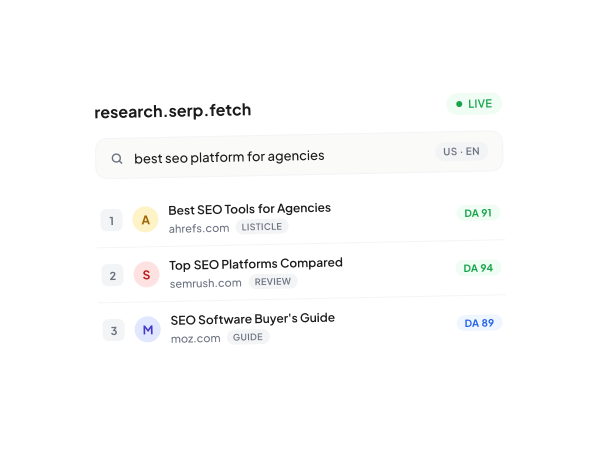
Live SERP Data
Fetch and Store SERPs per Client
Fetch a live SERP for any query via research.serp.fetch. Returns top results, domain authority signals, and content types. Results are stored per workspace for downstream gap and competitor analysis.
- Live SERP results on demand
- Domain authority signals returned
- Results stored and listable
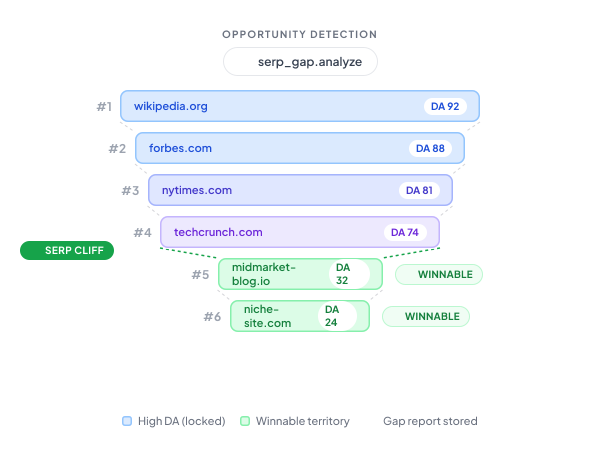
Gap Detection
Detect Winnable SERP Positions at Scale
research.serp_gap.analyze detects the SERP cliff — the position where result quality drops — and flags keywords where ranking is realistically achievable. Runs across any client workspace programmatically.
- SERP cliff position flagged
- Winnability score per keyword
- Runs via research.serp_gap.analyze
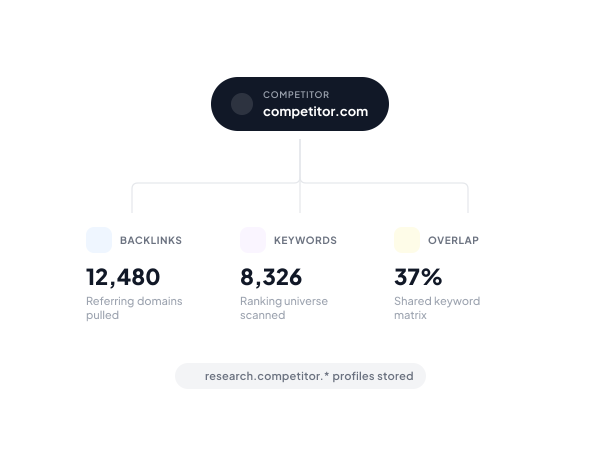
Competitor Research
Map Competitor Keywords and Backlinks
Add competitor URLs to pull backlink profiles and keyword universes via research.competitor.backlinks and research.competitor.keywords. Generate keyword overlap matrices to identify content and link-building targets.
- Backlink profile extraction
- Keyword overlap matrices
- research.competitor.overlap endpoint
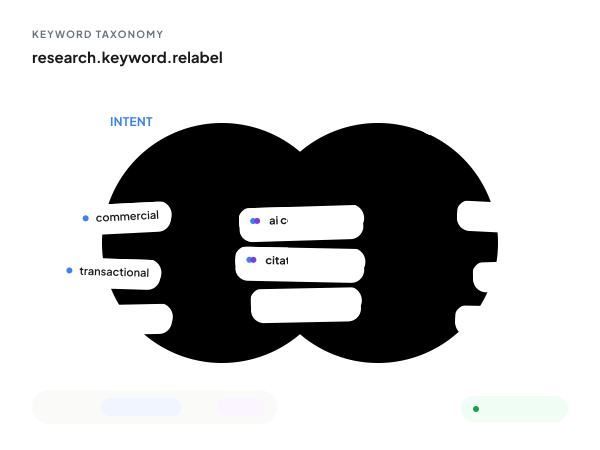
Keyword Taxonomy
Label Keywords by Intent and Relevance
Every keyword discovered through SERP analysis gets tagged on two axes — intent and relevance — via research.keyword.relabel. Filter and prioritize at scale across all client keyword universes.
- Intent x relevance 2D labeling
- Bulk relabeling at scale
- Filter via research.keyword.search
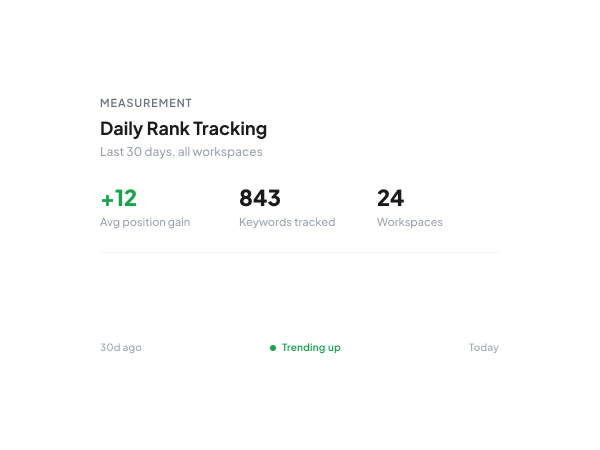
Rank Monitoring
Daily Rank Tracking Across All Clients
Track keyword positions daily across all client workspaces. Results are scoped per client via X-Workspace-Id and available via REST, the hosted MCP server, or the dashboard for unified reporting.
- Daily tracking with full history
- Scoped per client workspace
- Bulk rank pulls via REST or MCP
How it works
From sign-up to first call in five minutes.
Sign up and get your key
An `sk_test_*` key lands in your dashboard instantly. No demo gate — start calling real endpoints with shape-complete responses.
Add the MCP server or hit REST
`claude mcp add citationbench https://mcp.citationbench.com/mcp` from Claude Code, Cursor, or any MCP client. Or `curl` against `api.citationbench.com/v1/*` directly.
Run a tool or invoke an agent
Every tool returns shape-complete demo data without auth, so your agent works before the user signs up. Tools across research, production, indexing, link-building, and agents.
Scope to a workspace and ship
Add `X-Workspace-Id: ws_***` to scope per client. Switch to a live `sk_live_*` key when you're ready. Same API surface, same SDK.
Why CitationBench
Built for production, agency-scale, and AI-agent-first.
~35 tools, one MCP server
Hosted at mcp.citationbench.com/mcp. Works with Claude Code, Cursor, Claude Desktop, Windsurf, and ChatGPT Apps. No self-hosting required.
Durable jobs, not fire-and-forget
Every long-running call runs on Cyclonic workers — survives restarts, cancellable, resumable, streams via SSE. Production-safe by default.
Multi-workspace from day one
One master API key, N client workspaces. Switch with a single `X-Workspace-Id` header. Per-client data isolation, bulk ops across all of them.
Demo mode out of the box
Every endpoint responds in shape-complete demo mode without auth, so you can build the agent before the user signs up.
FAQ
Common questions
Start Automating SERP Analysis Today
CitationBench gives agencies one REST API for SERP fetch, gap detection, competitor research, and rank tracking across every client.
Start Free