API for Keyword Research Built for AI Engineers
Feed your LLMs rich, contextual keyword data with 2D intent and relevance labeling. CitationBench provides a developer-grade API designed for agentic SEO workflows.
# Discover and label keywords from a seed URLPOST /v1/research/keyword> { "seed": "ai seo tools", "limit": 25, "label": true }{ "kw": "ai seo agent", "intent": "COMMERCIAL", "relevance": "CORE" }{ "kw": "seo automation api", "intent": "TRANSACTIONAL", "relevance": "ADJACENT" }{ "kw": "llm keyword research", "intent": "INFORMATIONAL", "relevance": "CORE" }# Filter labeled results downstreamresearch.keyword.search> { "intent": "COMMERCIAL", "relevance": "CORE" }✓ 14 keywords matched · ready for content pipelineGeneric Keyword APIs Fall Short
Most keyword APIs return raw data with no context, forcing engineers to build expensive enrichment layers from scratch.
Raw Keywords Without Intent
Tools like Ahrefs export flat keyword lists with no intent or relevance scoring, leaving LLMs with nothing to prioritize.
Fragmented Enrichment Pipeline
Combining volume, intent, SERP, and competitor data requires stitching five separate APIs together manually.
Data Trapped Outside Your Agent
Keyword data locked in dashboards cannot be passed directly into agentic workflows or downstream content generation.
The fix
One API. Labeled Keywords Ready for LLMs.
CitationBench exposes keyword discovery, 2D intent and relevance labeling, SERP analysis, and competitor intelligence through a single REST API and hosted MCP server callable from any LLM agent framework.
Every Tool Your Keyword Pipeline Needs
From seed discovery to SERP gap detection, these five APIs give engineers the full research stack in one composable surface.
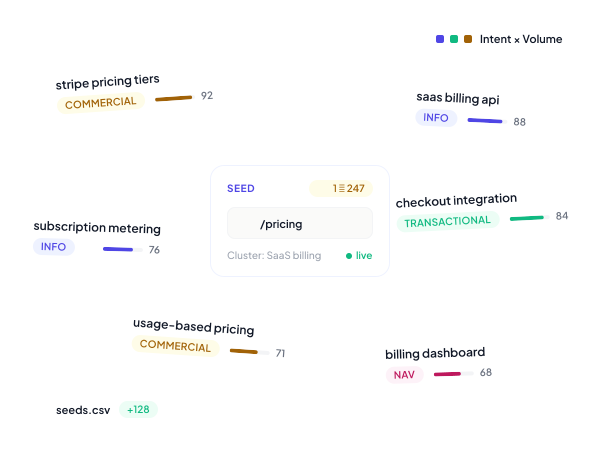
Core API
Keyword Discovery and Labeling via API
Discover, cluster, and label keyword sets from a seed URL or list via POST /v1/research/keyword. Results persist for downstream content production. Covers bulk import via research.keyword.bulk_create, create, update, delete, list, and search.
- POST /v1/research/keyword
- Bulk import and clustering
- Persisted results for pipelines
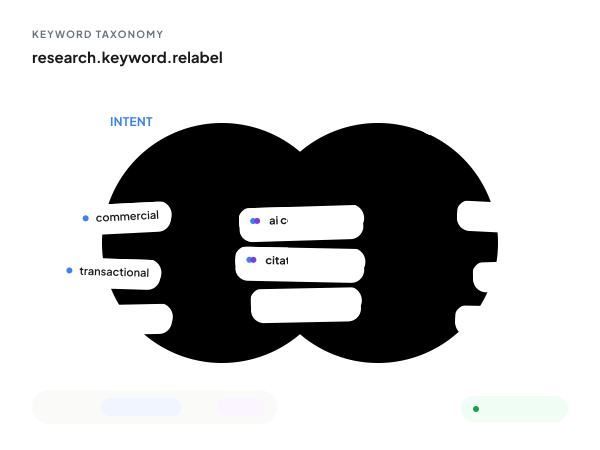
2D Taxonomy
Intent and Relevance Labels on Every Keyword
Tags every keyword on two axes: intent (informational, commercial, transactional, navigational) and relevance (core, adjacent, tangential). Filter and prioritize at scale using research.keyword.search with label parameters. Industry-first taxonomy built for LLM pipelines.
- Intent × relevance axes
- Filter by label at scale
- Relabel via research.keyword.relabel
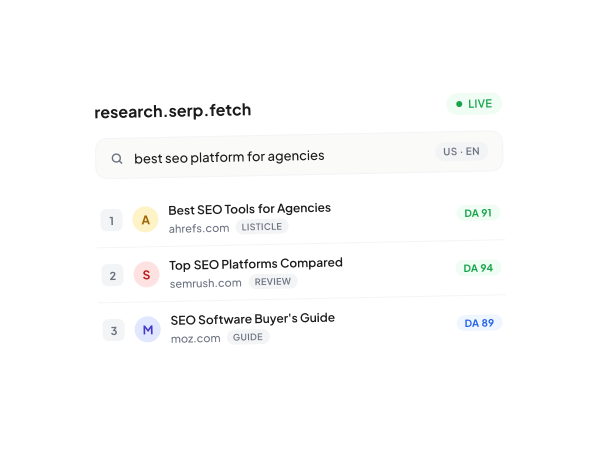
SERP Data
Live SERP Fetch for Any Query
Fetch live SERP results for any query via research.serp.fetch. Returns top results, domain authority signals, and content type classification. Results stored and listable for content gap and competitive research workflows.
- research.serp.fetch
- Domain authority signals
- Content type classification
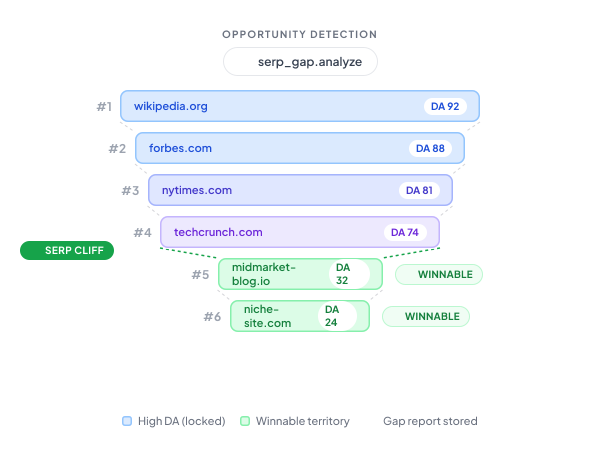
Opportunity Detection
SERP Gap Analysis for Winnable Keywords
Detects the SERP cliff where result quality drops below a domain authority threshold, flagging keywords with realistically winnable positions. Runs via research.serp_gap.analyze and integrates directly into keyword prioritization workflows.
- SERP cliff detection
- Domain authority cutoff scoring
- research.serp_gap.analyze
Developer Tooling
Typed SDK for Keyword API Integration
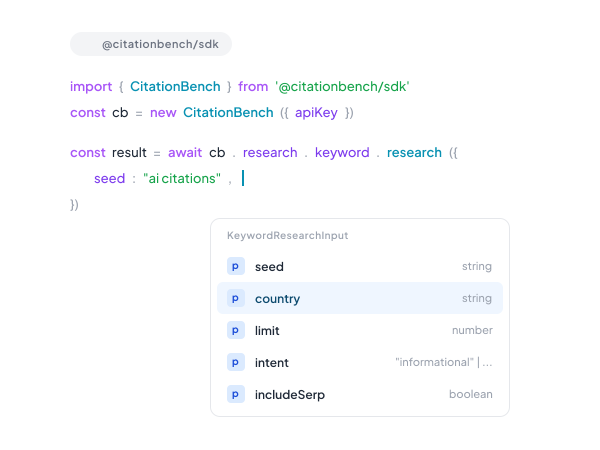
The official @citationbench/sdk gives TypeScript and Node developers a fully typed client for all keyword research endpoints. Eliminates manual REST wiring and surfaces autocomplete-friendly interfaces for every research.keyword.* method.
- @citationbench/sdk on npm
- Full TypeScript type coverage
- Works alongside MCP server
How it works
From sign-up to first call in five minutes.
Sign up and get your key
An `sk_test_*` key lands in your dashboard instantly. No demo gate — start calling real endpoints with shape-complete responses.
Add the MCP server or hit REST
`claude mcp add citationbench https://mcp.citationbench.com/mcp` from Claude Code, Cursor, or any MCP client. Or `curl` against `api.citationbench.com/v1/*` directly.
Run a tool or invoke an agent
Every tool returns shape-complete demo data without auth, so your agent works before the user signs up. Tools across research, production, indexing, link-building, and agents.
Scope to a workspace and ship
Add `X-Workspace-Id: ws_***` to scope per client. Switch to a live `sk_live_*` key when you're ready. Same API surface, same SDK.
Why CitationBench
Built for production, agency-scale, and AI-agent-first.
~35 tools, one MCP server
Hosted at mcp.citationbench.com/mcp. Works with Claude Code, Cursor, Claude Desktop, Windsurf, and ChatGPT Apps. No self-hosting required.
Durable jobs, not fire-and-forget
Every long-running call runs on Cyclonic workers — survives restarts, cancellable, resumable, streams via SSE. Production-safe by default.
Multi-workspace from day one
One master API key, N client workspaces. Switch with a single `X-Workspace-Id` header. Per-client data isolation, bulk ops across all of them.
Demo mode out of the box
Every endpoint responds in shape-complete demo mode without auth, so you can build the agent before the user signs up.
FAQ
Common questions
Start Building with the Keyword Research API
Get labeled, LLM-ready keyword data from a single API designed for agentic SEO workflows.
View API Docs