2D Keyword Labeling for Smarter Content Strategy
CitationBench's industry-first intent × relevance taxonomy tags every keyword on two axes, so agencies can prioritize content that converts instead of guessing at user context.
One-dimensional keyword lists fall short
Flat keyword lists strip context, leaving teams unable to prioritize or align content to the buyer journey.
Intent gets lost in the list
Generic tools return volume and difficulty but never tell you whether a keyword signals a buyer or a browser.
Funnel relevance is invisible
Without a relevance axis, teams waste cycles writing content for tangential keywords that never convert to pipeline.
Reporting misleads stakeholders
Ranking reports built on unlabeled keywords make every keyword look equal, obscuring what actually drives revenue.
The fix
Two axes. Full context. Actionable keyword strategy.
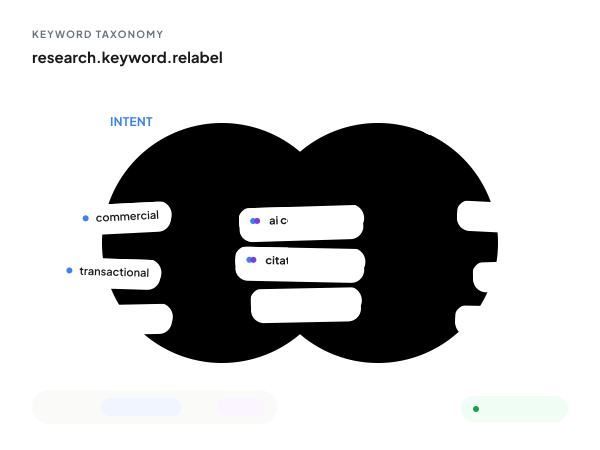
CitationBench's 2D keyword labeling maps every keyword across intent (informational, commercial, transactional, navigational) and relevance (core, adjacent, tangential). Filter, prioritize, and build content plans grounded in buyer context via the research.keyword API or MCP tools.
Five Tools Built Around Keyword Context
From labeling your keyword universe to closing gaps competitors miss, every feature below connects to the intent and relevance data that 2D labeling produces.
Core Taxonomy
Intent and Relevance Labels at Scale
Tags every keyword on two axes using research.keyword.relabel and research.keyword.search. Filter your entire keyword universe by intent stage or relevance tier before a single word is written.
- Intent × relevance axes
- Bulk relabeling via API
- Filter by label downstream
Keyword Discovery
Build a Labeled Keyword Universe Fast
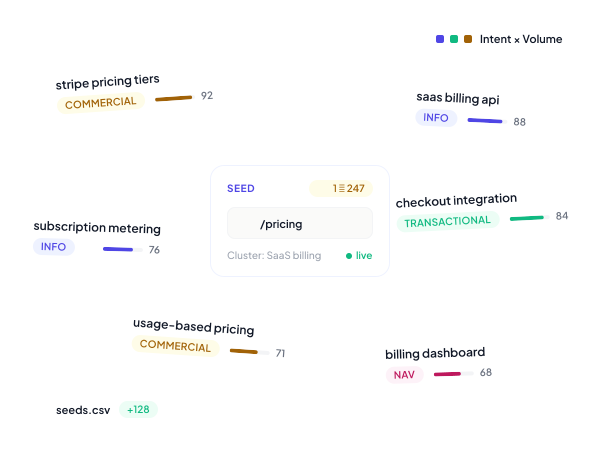
POST /v1/research/keyword discovers, clusters, and applies 2D labels in one call. Bulk import via research.keyword.bulk_create. Every keyword enters your workspace already categorized by intent and relevance.
- Seed URL or list input
- Clusters and labels on creation
- Persisted for downstream use
Opportunity Detection
Find Winnable Keywords Worth Targeting
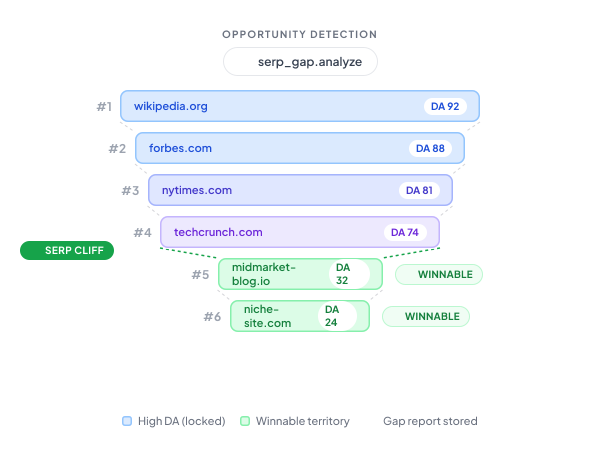
research.serp_gap.analyze detects where SERP result quality drops and domain authority is low. Pair with 2D labels to surface core-intent keywords that are both high-value and realistically rankable.
- SERP cliff detection
- Low DA opportunity flags
- Runs via research.serp_gap.analyze
Content Planning
Surface Missing Topics by Intent Tier
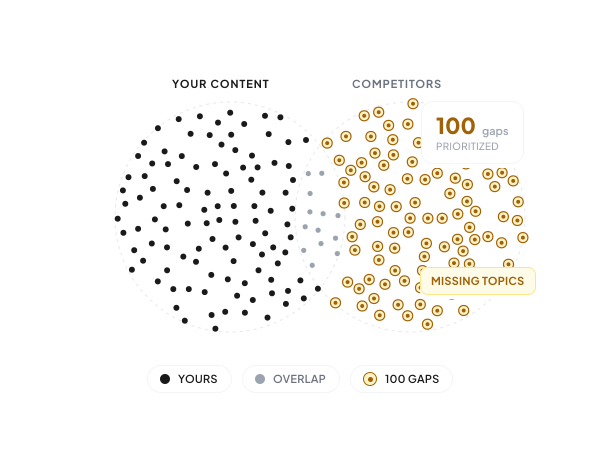
research.content_gap.find compares your content inventory against competitor pages and labeled keyword targets. Returns prioritized gaps organized by the intent and relevance tiers your 2D labels already define.
- Competitor content comparison
- Prioritized gap reports
- Stored and listable results
Content Production
Produce Content Matched to Keyword Intent
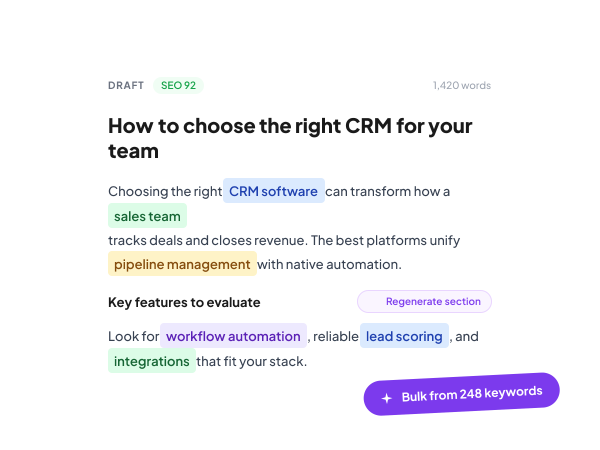
produce.blog_post.create and produce.blog_post.bulk_create turn your labeled keyword lists directly into SEO briefs and full drafts. Intent labels travel with the keyword into the brief so content matches the search context.
- Long-form SEO drafts
- Bulk creation from keyword lists
- Section-level regeneration
How it works
From sign-up to first call in five minutes.
Sign up and get your key
An `sk_test_*` key lands in your dashboard instantly. No demo gate — start calling real endpoints with shape-complete responses.
Add the MCP server or hit REST
`claude mcp add citationbench https://mcp.citationbench.com/mcp` from Claude Code, Cursor, or any MCP client. Or `curl` against `api.citationbench.com/v1/*` directly.
Run a tool or invoke an agent
Every tool returns shape-complete demo data without auth, so your agent works before the user signs up. Tools across research, production, indexing, link-building, and agents.
Scope to a workspace and ship
Add `X-Workspace-Id: ws_***` to scope per client. Switch to a live `sk_live_*` key when you're ready. Same API surface, same SDK.
Why CitationBench
Built for production, agency-scale, and AI-agent-first.
~35 tools, one MCP server
Hosted at mcp.citationbench.com/mcp. Works with Claude Code, Cursor, Claude Desktop, Windsurf, and ChatGPT Apps. No self-hosting required.
Durable jobs, not fire-and-forget
Every long-running call runs on Cyclonic workers — survives restarts, cancellable, resumable, streams via SSE. Production-safe by default.
Multi-workspace from day one
One master API key, N client workspaces. Switch with a single `X-Workspace-Id` header. Per-client data isolation, bulk ops across all of them.
Demo mode out of the box
Every endpoint responds in shape-complete demo mode without auth, so you can build the agent before the user signs up.
FAQ
Common questions
Start Labeling Keywords with Full Context
CitationBench's 2D keyword labeling gives every keyword an intent and relevance label so your content strategy builds on real buyer context.
Start Free