API for Content Gap Analysis Built for Developers
Standard APIs can't handle complex queries. CitationBench's REST API and hosted MCP server power scalable content gap analysis with competitor intelligence and keyword research in one platform.
# Find content gaps against a competitor domainPOST /v1/research/content-gap> { "target_url": "https://acme.com", "competitor_url": "https://rival.com" }job_id: job_4xm9r · status: running# Gaps returned as prioritized topic clusters{ "gaps": [{ "topic": "ai content strategy", "priority": "high" }, { "topic": "programmatic seo guide", "priority": "high" }, { "topic": "serp gap detection", "priority": "medium" } ... ] }# Also callable via MCP toolresearch.content_gap.findGeneric APIs Break Under Real SEO Demands
Developers building SEO tools hit hard limits fast when APIs can't handle scale, complexity, or multi-client data isolation.
Queries Fail at Scale
Standard content gap APIs time out or return incomplete data when processing large keyword universes across multiple client sites.
No Multi-Client Isolation
Single-tenant API designs force you to build workspace separation yourself, adding weeks of engineering work before shipping.
Research Silos Kill Velocity
Separate tools for SERP analysis, competitor research, and gap detection force you to stitch together fragmented data pipelines manually.
The fix
One API. Content Gap Analysis Plus Full SEO Stack.
CitationBench exposes content gap analysis, SERP fetch, competitor intelligence, and keyword research through a single REST API and hosted MCP server at mcp.citationbench.com/mcp. Multi-workspace architecture handles N client brands via one API key.
Every Tool Your Content Gap Workflow Needs
Five production-grade API endpoints and MCP tools covering gap analysis, SERP research, competitor data, and keyword intelligence for developers building SEO systems.
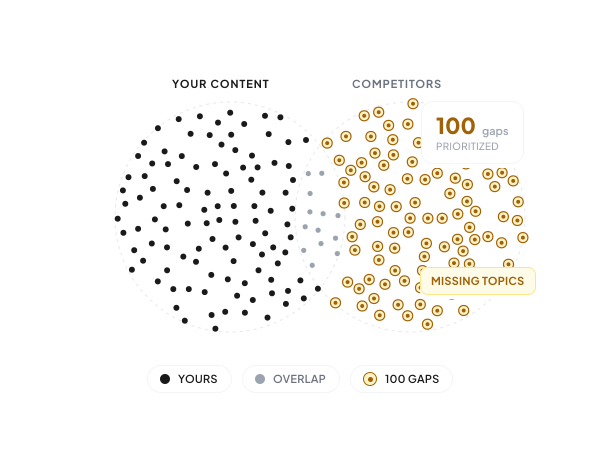
Gap Analysis
Content Gap Analysis via REST and MCP
Compare your content inventory against competitors and target keywords via `research.content_gap.find`. Returns prioritized gap reports stored and listable — ready for downstream content production pipelines.
- Prioritized topic gap reports
- Stored and listable results
- Callable via REST or MCP
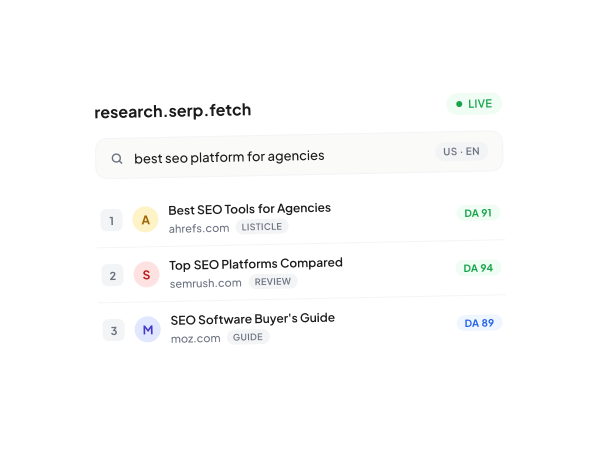
SERP Research
Live SERP Fetch for Any Query
Pull live SERP data for any query via `research.serp.fetch`. Returns top results, domain authority signals, and content types — the context your gap analysis needs before generating a single word of content.
- Live SERP retrieval
- Domain authority signals
- Content type classification
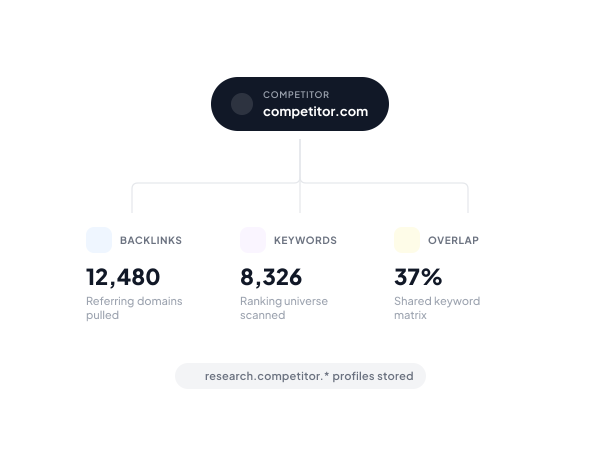
Competitor Data
Competitor Keyword and Backlink Overlap
Add competitor URLs to pull backlink profiles and keyword universes via `research.competitor.keywords` and `research.competitor.overlap`. Generate keyword overlap matrices to feed directly into gap analysis.
- Keyword overlap matrices
- Backlink profile pulls
- Multi-competitor comparison
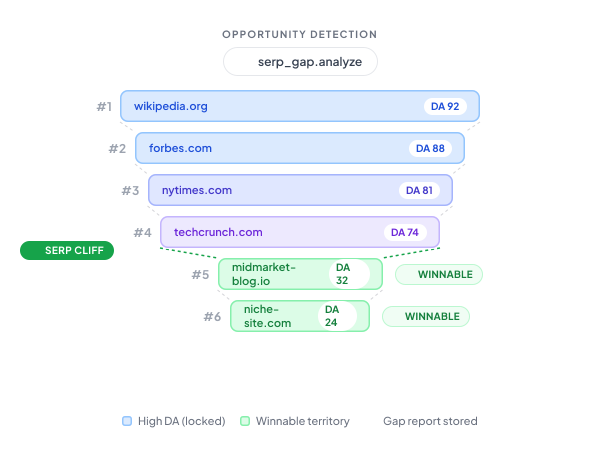
Opportunity Detection
SERP Cliff Detection for Winnable Keywords
Detect the SERP cliff — where result quality drops and ranking becomes realistically attainable — via `research.serp_gap.analyze`. Flags keywords where low domain authority incumbents signal a clear opening.
- SERP cliff detection
- Winnable keyword flags
- Integrated gap scoring
Agency Architecture
Multi-Client Workspaces via Single API Key
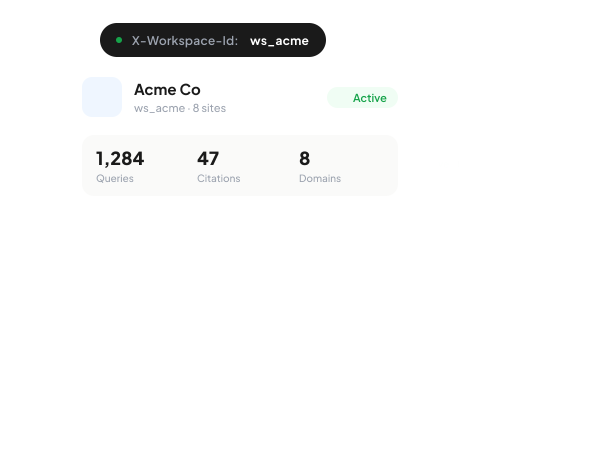
Manage N client brands under one master API key. All content gap results, competitor data, and keyword universes are isolated per client via the `X-Workspace-Id` header — no custom middleware required.
- X-Workspace-Id header scoping
- Per-client data isolation
- Bulk cross-workspace actions
How it works
From sign-up to first call in five minutes.
Sign up and get your key
An `sk_test_*` key lands in your dashboard instantly. No demo gate — start calling real endpoints with shape-complete responses.
Add the MCP server or hit REST
`claude mcp add citationbench https://mcp.citationbench.com/mcp` from Claude Code, Cursor, or any MCP client. Or `curl` against `api.citationbench.com/v1/*` directly.
Run a tool or invoke an agent
Every tool returns shape-complete demo data without auth, so your agent works before the user signs up. Tools across research, production, indexing, link-building, and agents.
Scope to a workspace and ship
Add `X-Workspace-Id: ws_***` to scope per client. Switch to a live `sk_live_*` key when you're ready. Same API surface, same SDK.
Why CitationBench
Built for production, agency-scale, and AI-agent-first.
~35 tools, one MCP server
Hosted at mcp.citationbench.com/mcp. Works with Claude Code, Cursor, Claude Desktop, Windsurf, and ChatGPT Apps. No self-hosting required.
Durable jobs, not fire-and-forget
Every long-running call runs on Cyclonic workers — survives restarts, cancellable, resumable, streams via SSE. Production-safe by default.
Multi-workspace from day one
One master API key, N client workspaces. Switch with a single `X-Workspace-Id` header. Per-client data isolation, bulk ops across all of them.
Demo mode out of the box
Every endpoint responds in shape-complete demo mode without auth, so you can build the agent before the user signs up.
FAQ
Common questions
Start Building with the Content Gap API
Connect CitationBench to your SEO tool or agent and run content gap analysis across all your clients from one API.
View MCP Docs